The Relationship between Timber Harvesting and Invasive Species Spread
Exploring the complex ecological conflict between forestry practices and ecosystem integrity
Research Overview
The complex relationship between timber harvesting practices and invasive species spread represents a significant ecological conflict with far-reaching implications for forest ecosystems, revealing how economic forestry objectives have historically undermined ecological integrity despite evolving management approaches.
Understanding this conflict requires examining how historical forestry policies, current industry practices, and emerging management approaches have collectively shaped the present ecological challenges.
"The context surrounding exotic plantations and timber harvesting reveals a conflict deeply rooted in the tension between economic forestry objectives and ecological integrity."
Well-intentioned management strategies have inadvertently created pathways for invasive species establishment and proliferation, demonstrating the need for integrated approaches that balance production requirements with ecosystem protection.
Historical Context
The historical development of exotic plantations demonstrates how deliberate forestry policies prioritizing economic outcomes created the foundation for current invasive species challenges.
Exotic coniferous plantations of "Pinus, Cupressus and Eucalyptus species were established in the Kibale Forest Reserve purposely for timber production following the Lockwood Consultants recommendation of 1973" (Kasenene, p. 41).
These plantations were not accidental introductions but rather strategic interventions guided by professional forestry consultants specifically targeting grassland areas for conversion to timber production.
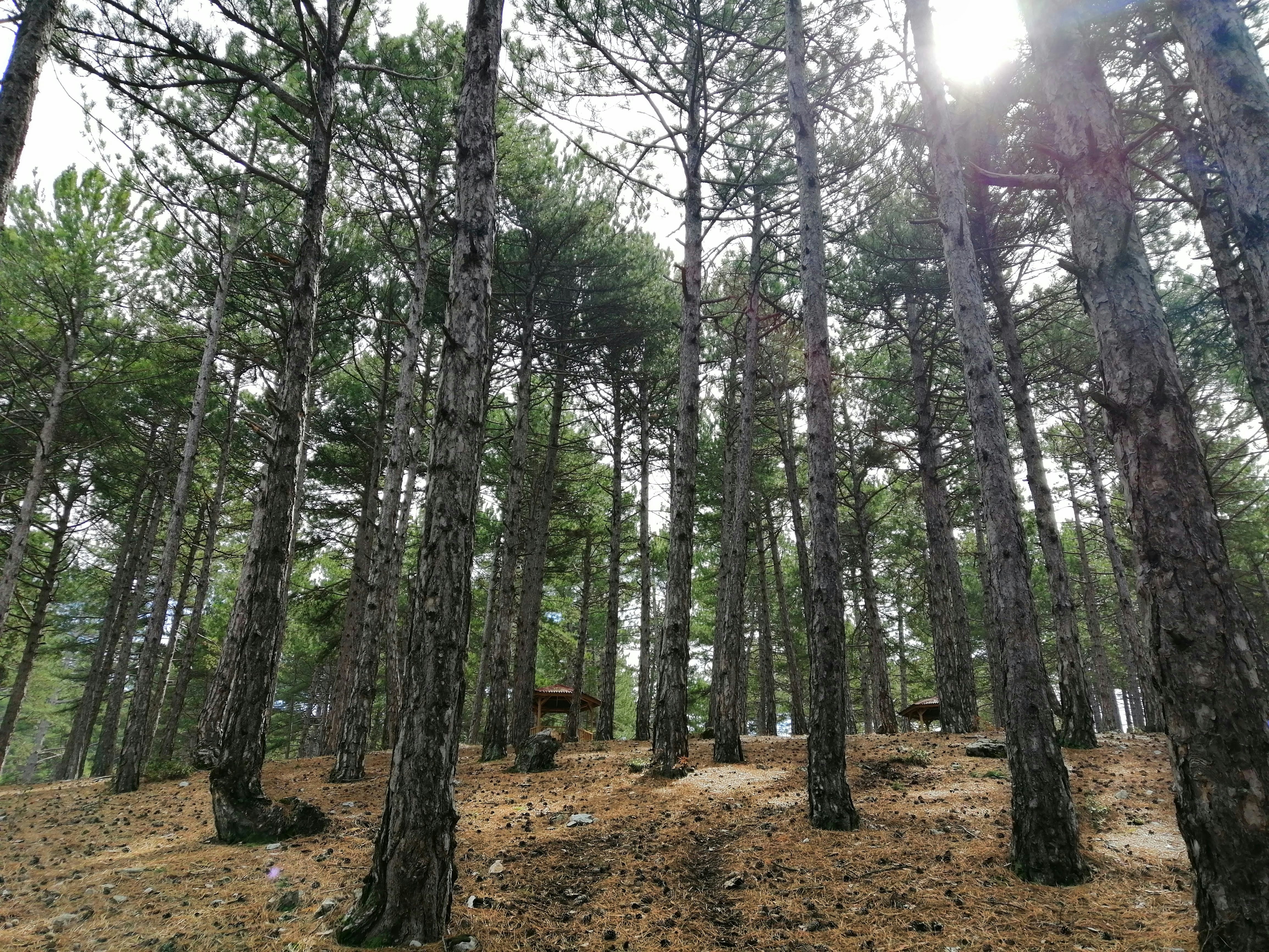
Pine plantation established for timber production
Legacy Effects
This historical context reveals a fundamental conflict in forest management philosophy where economic considerations often overshadowed ecological consequences.
The deliberate introduction of non-native species fundamentally altered forest composition and competitive dynamics, creating legacy effects that modern management must now navigate, often with incomplete ecological knowledge about long-term consequences.
Current Timber Harvesting Methods
Operational Pathways
Current timber harvesting methods have significantly exacerbated invasive species spread through specific operational pathways.
"The disturbance caused during timber harvesting processes creates conditions that encourage the establishment and spread of invasive plants. The machinery and traffic movement within a job site may introduce and spread seeds, roots, and plant parts from one job site to another" (LeDoux and Martin, p. 1).
Five Principal Stages
- Haul road/skid trail construction
- Landing construction and related extraction activities
- Trucking and log hauling
- Moving equipment from job to job
- Moving logs/stems from infected areas to uninfected areas
Source: LeDoux and Martin, p. 2
Impact of Harvesting Methods
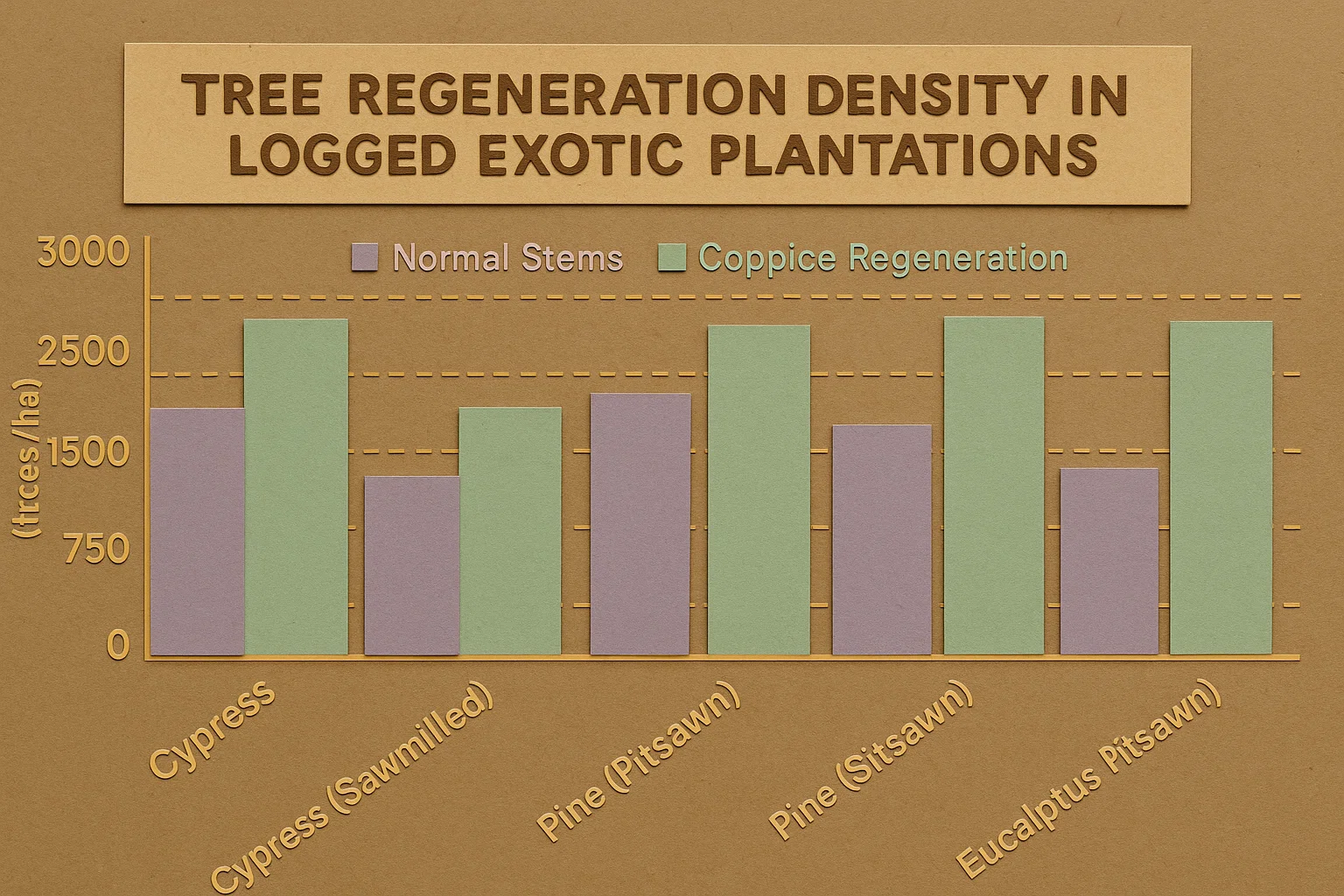
Fig. 1. Tree Regeneration Density in Logged Exotic Plantations (Kasenene, p. 41)
This data visualization reveals how harvesting methods significantly affect forest recovery patterns. Pitsawing generally supports higher normal stem regeneration than sawmilling across all plantation types, while coppice regeneration consistently dominates across all methods.
Pine plantations show the highest normal stem regeneration (2309.2 trees/ha in pitsawn areas), while Eucalyptus plantations demonstrate the lowest (1513.7 trees/ha). These findings illustrate how harvesting techniques create distinct ecological conditions that influence regeneration patterns.
Industry Response
The forest industry's evolving response to invasive species challenges represents a critical contextual shift toward collaborative management frameworks.
Collaborative Approach
According to Stone and Carnegie, the Australian forest industry has "increasingly recognized the necessity of a coordinated approach to dealing with the threat posed by exotic pests and pathogens and accepting biosecurity is a 'shared responsibility' in partnership with government" (Stone and Carnegie, p. 1).
Institutional Adaptation
Stone and Carnegie highlight the establishment of "the Forest Health and Biosecurity (FHB) Subcommittee under the auspices of the FPPA Growers Chamber" as a concrete step toward institutionalizing this collaborative approach (Stone and Carnegie, p. 1).
This evolution in approach illustrates how the context of the conflict is changing as stakeholders develop more sophisticated, multi-level solutions that distribute responsibility across the forestry sector. By formalizing collaborative structures and recognizing shared responsibility, the industry is moving beyond the historical pattern of prioritizing economic outcomes over ecological integrity.
Conclusion
The context surrounding the conflict between timber harvesting and invasive species management reveals a complex interplay of historical decisions, operational realities, and evolving institutional responses.
What began as economically-driven plantation forestry has developed into a multifaceted conflict requiring carefully considered solutions that balance production needs with ecological integrity.
Moving forward, effective management will require integrating historical awareness, operational reform, and institutional collaboration to create context-sensitive approaches that can reconcile the competing demands of economic forestry and ecological integrity in an era of increasing invasive species pressure.
Works Cited
Kasenene, John M. "Impact of Exotic Plantations and Harvesting Methods on the Regeneration of Indigenous Tree Species in Kibale Forest, Uganda." African Journal of Ecology, vol. 45, no. s1, Mar. 2007, pp. 41–47.
LeDoux, Chris B., and Danielle K. Martin. Proposed BMPs for Invasive Plant Mitigation during Timber Harvesting Operations. no. NRS-GTR-118, 2013, p. NRS–GTR–118.
Stone, Christine, and Angus Carnegie. "The Australian Forest Industry Takes a Lead Role in Reducing the Risk from Exotic Pests and Pathogens." Australian Forestry, vol. 81, no. 1, Jan. 2018, pp. 1–2.